
EARS HAVE EYES // Episode 31
Airing Wednesday, September 11, 2024 at 8 pm MST
on CJSW 90.9 FM, New Adventures in Sound Art, & Golden Co-Op Radio
BELLWETHER:
sounds at the edge of foreseeable futures
ARTISTS:
Alexandra Spence
Felix Mayer
Helen Ottoway
Matthew Burtner
Pierrot Desperes
Soft Ions
Feature image: Bells stolen by the Austro-Hungarian army in a storehouse near Lviv, Ukraine, in 1916. Public domain.

EARS HAVE EYES is a monthly sound art radio program airing on CJSW 90.9 FM in Calgary/Mohkinstsis, Golden Co-op Radio in Golden, BC, and NAISA Radio in South River, Ontario. You can listen to podcasts of previous episodes here.
A bellwether is an omen, soothsayer, or predictor of the future. For our September episode of EARS HAVE EYES, we’re responding to the changing seasons through an exploration of anticipation, anxiety, and sound as an agent of foreshadowing for things to come. From climate anxiety to rising waters, unidentified noises to literal bells, local, national, and international sound artists joined us in interpreting Bellwethers for today’s program.
Thanks to the participating artists and our friends at CJSW, NAISA, and Golden Co-op Radio!
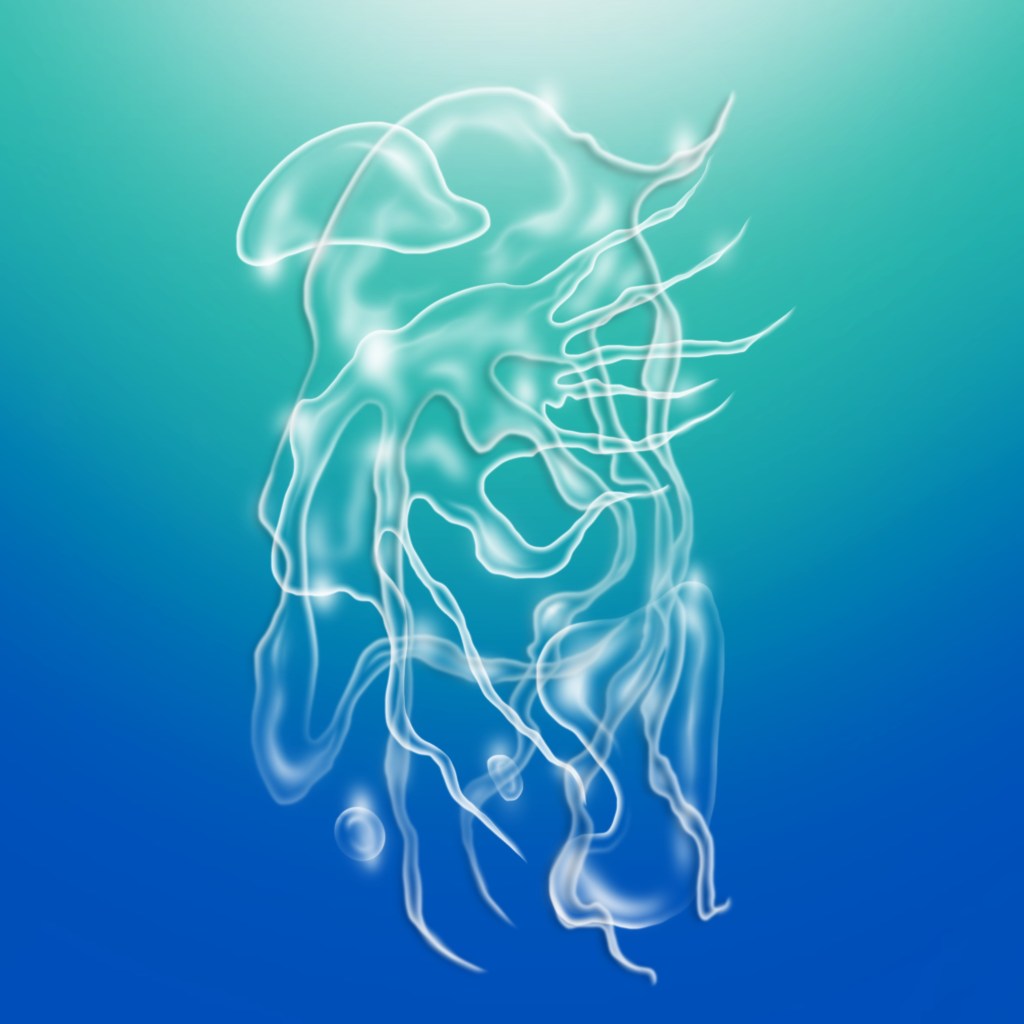
Alexandra Spence
Alexandra Spence is a sound artist and musician living on unceded Wangal land in Sydney, Australia. Through her practice Alex attempts to reimagine the intricate relationships between the listener, the object, and the surrounding environment as a kind of communion or conversation. Her aesthetic favours field recordings, analogue technologies and object interventions (she holds the belief that electricity might actually be magic).
About The Sea:
“…it’s encouraged that you shed your perceived physical dimensions and terrestrial limitations. Let yourself be carried into the slipstream of these vast, poetic ecosystems and enjoy a newfound existence as a fleck or a mote trailing behind a monumental tail. A devotional offering, a careful investigation of form, periphery and weightlessness, of connection and communication. [Alexandra] Spence shares a reimagining of ocean strata that buoys and shifts the listener through sonic intimacies and expanses, to dreamt seabeds with distant sunlight, until you eventually find yourself adrift on some opalescent vessel (dimensions unknown, a tiny shell?), refreshed, journeyed and gently forewarned that our oceans are not infinite.”
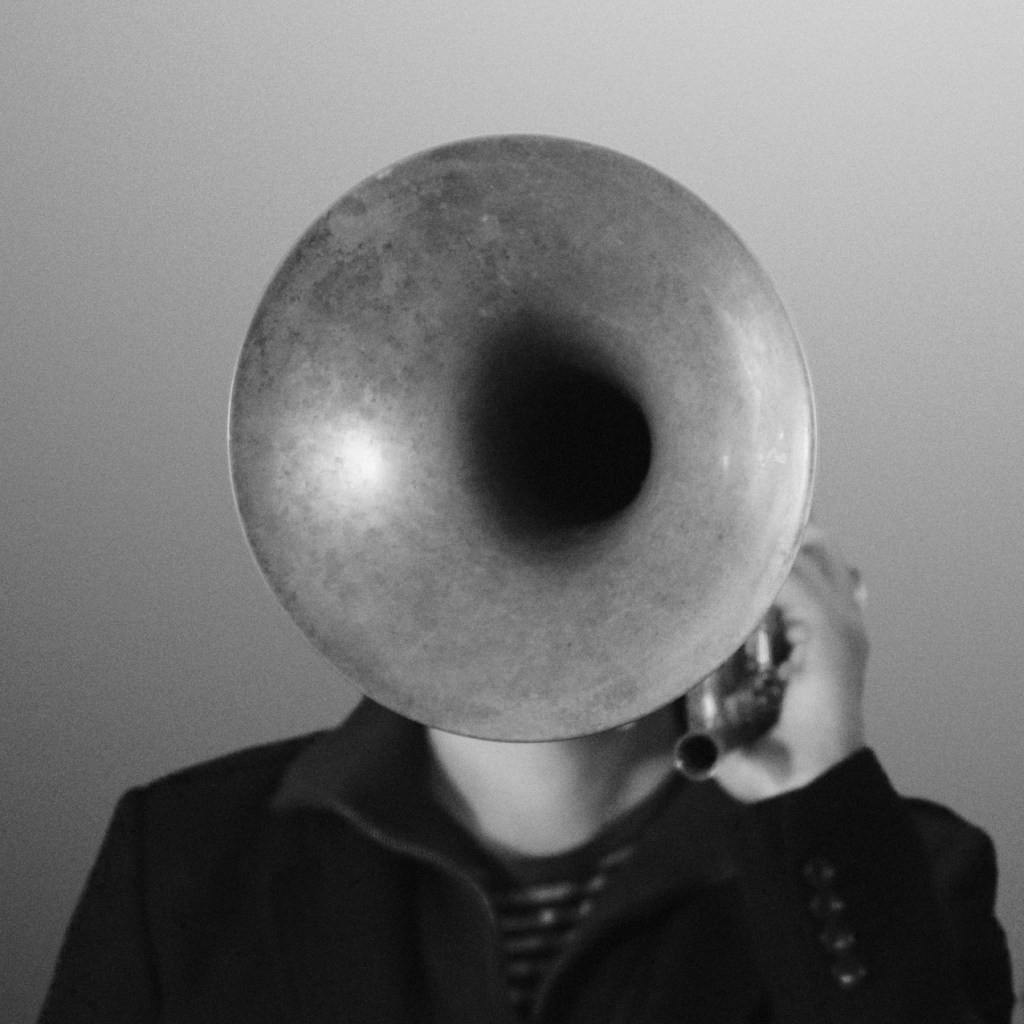
Felix Mayer
Felix Mayer is a Hamburg based trombonist, composer and sound artist exploring boundaries of improvisational, compositional and instrumental practices, in bands, collectives and ad-hoc groups. In multidisciplinary collaborations with literature, dance, film and performance, his composed works use alternative notation such as text and game pieces, video scores and improvisation concepts. In installative, site-specific works, he deals with the possibilities of the success of communication, connection and relationship via (always) alienating aids.
Slow Bell refers to the nautical term for reducing speed. Like most of my works, this piece uses recordings of everyday objects and actions. The sounds, provided by students from the Trossingen Conservatory as part of a sound design contest, include those generated by a vacuum cleaner, apple, printer, baking tray, and hamster.
Helen Ottaway
Helen Ottaway is a composer, pianist, installation artist and curator. While a student at Goldsmiths’, University of London in the 1980s, she studied briefly with John Cage and up to 1998 worked as a performer, musician and composer with experimental music and theatre groups, touring nationally and internationally. In 1999, with arts administrator Steve Ehrlicher, she formed Artmusic to promote and produce collaborative,site-specific and participatory work. As lead artist she has had extensive experience of working with artists from different disciplines and curating and producing her own and other artists work. As a composer she has received commissions from BBC2, Salisbury Festival, Bath Film Festival, the Bernardi Music Group and others. Landscape, water and nature provide inspiration and and are recurring themes in a style that is predominantly minimalist with influences from folksong and English pastoral and church music traditions.
Ring Ring Bell is composed of sounds and words collected from around the M11 in London between Aldgate and Bow in March 2021, an evocation of life along the Hight Street heard through its bells. Ring Ring Bell was part of the London Borough of Tower Hamlets’ High Street 2012, an ambitious programme to enhance and celebrate the ribbon of London life that connects the City at Aldgate to the Olympic park at Stratford. For Ring Ring bell, we have collected and recorded bell sounds from Aldgate to Bow flyover. The bells range from jingle bells and bicycle bells to clock bells and church bells and we have included bells in as many contexts as possible – from school playgrounds and theatres to boxing rings and pubs. The largest categories in our collection are church bells and bicycle bells – both are very present on the High Street. At the same time as collecting the sounds of all the bells we came across, we also asked their owners to talk about their bells, what they are used for and what they mean to them. This was surprising, moving, entertaining, enchanting and some cases instructive.
Matthew Burtner
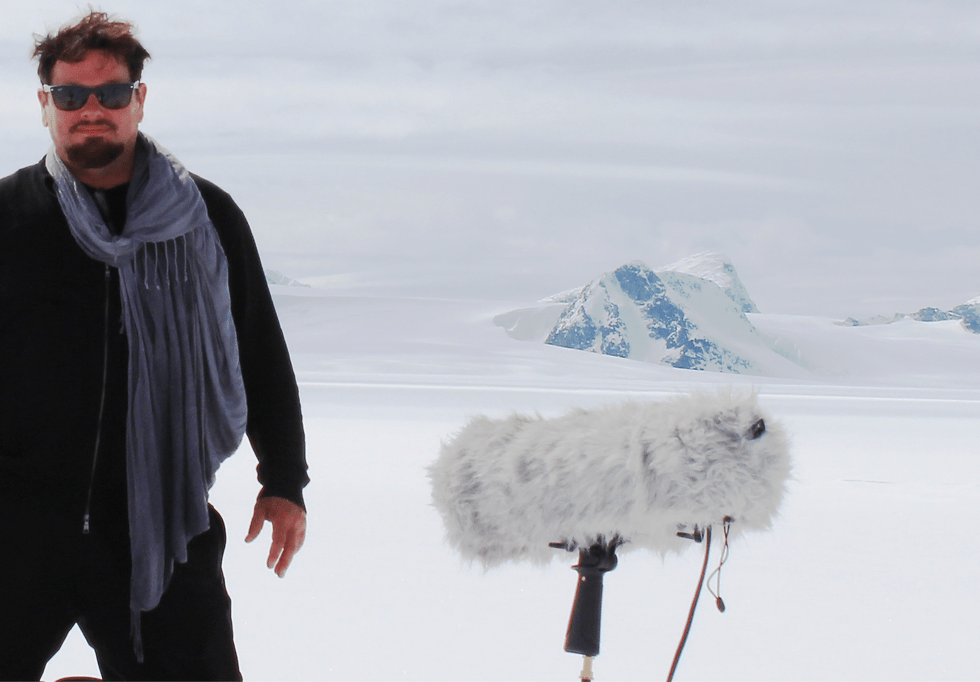
Matthew Burtner is an IDEA and EMMY Award-winning composer, sound artist and ecoacoustician whose work explores embodiment, temporality and noise. Born and raised in Alaska, he studied music during a time of rapid global warming in the north, and developed ecoacoustic music as a way to embed environmental change into sound art. His new album “Icefield” is out now.
If glaciers could speak, what would they tell us? On ICEFIELD, veteran composer Matthew Burtner answers that very question with an eclectic series of works that explore the intersection between the environment and controlled sound. Combining specialized field recordings of glaciers and Arctic storms, electroacoustics, and traditional instruments, Burtner creates surreal soundscapes that blur the line between audio and physical experience—from the opera Auksalaq to the audio synthesization of data on Sonification of an Arctic Lagoon, each piece on the album channels the whip-crack chill of the air, the blinding snow, and the awe-inspiring sight of glacial fields breaking apart and bringing sea levels higher and higher.
About Icefields:
“I grew up in Alaska with the glaciers of the Kennai Peninsula and the Chugach Mountains, and so it was a very special experience for me to visit the ice/snow source of so many of those glaciers up on the Harding Icefield. To make the music, I pre-composed melodic ideas for the saxophone and planned a recording session that would allow me to listen to the icefield through the saxophone, and the saxophone through the icefield. Then, after the plane dropped me off and I started working, I used the plan as a way to introduce myself to the icefield, and then things proceeded much more improvisationally. Later,I listened to the sessions and mixed the piece using those raw materials recorded in the field. The idea to use the bass saxophone was to showcase my insignificance in the presence of that place– my biggest, loudest voice is just insignificant and lost in that incredibly massive place, one without any reverberation, and so much acoustic absorption and masking. The approach allowed me to serve as a conduit between the icefield and the saxophone, as if the saxophone becomes inhabited by the energy of the icefield and it grows to a scale of power, unwavering gentleness and strength that I feel in the resulting music, something a human couldn’t produce.”
Pierrot Desperes
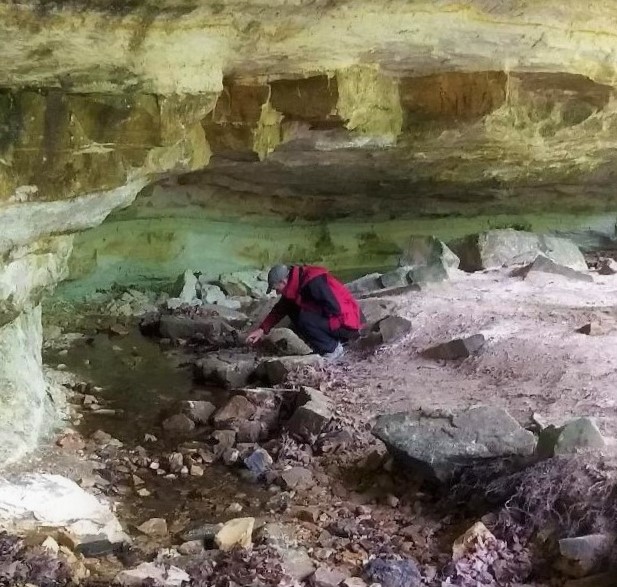
Pierrot Desperes is a sound artist, field recordist and musician living in St. Louis, Missouri. Inspired by the history of the area he explores and artifacts discovered on his journey, he fabricates sonic narratives to reimagine a soundscape. In his works he uses unprocessed field recordings as well as found sounds mixed on a sonic palette using granular synthesis.
Emilia Martin is an artist working primarily with photography, sound and writing and since 2021. Emilia is in the process of researching and creating a body of work that focuses on how meteorites function in the history of modern science, mythologies, folk tales and folk beliefs, culminating into a book to be released this September.
About A Mottled Thicket:
“For my album Cosmos I created soundscapes of pivotal passages in the novel of the same name by Witold Gombrowicz. “A Mottled Thicket” sonically recreates the opening scene from the book. As two young men search for a place to stay in the resort town of Zakopane, the sounds of the town – a ringing bell and voices – start to shimmer in the oppressive heat. To escape the sun the pair enter a mottled thicket where they find a hanged sparrow; a finding that foreshadows future events in the novel. The foreboding call of a raven then dissipates the sounds of human and bird activity. A train’s horn follows and acts to signal the continuation of their journey into town.”
Soft Ions
Jenna Anne Turner has frequent nightmares about the apocalypse, a fixation which has led to a steady output of darkly dissonant experimental music, sound-based and multimedia works. She currently plays experimental violin and found sounds in Soft Ions and The Olm. Her videos have appeared in Edmonton’s Gotta Minute Film Festival, Moss Index San Francisco and Pugnant Film Series Athens, and as projections at live performances. She has performed in events such as Nuit Blanche Edmonton, New Music Edmonton’s Now Hear This festival, and National Drone Day.
Parker Thiessen is a filmmaker, sound artist/musician and designer originally from Beaverlodge, Alberta, with an interest in collaboration, experimentation and DIY. Through his work, Thiessen has explored and propelled the growth of the experimental music scene in Edmonton, initiating the Ramshackle Day Parade noise collective and label, co-founding Pseudo Laboratories cassette label, and performing in Zebra Pulse, Private Investigators, and solo. His film work includes experimental shorts, live projections, music videos and video glitch experimentation.
About Valley of the Bells:
“Ringing bells for hope and healing. August 29, 2020.”

Thank you to the artists & listeners!
Special thanks to CJSW.
Want to share your sound art on future episodes of EARS HAVE EYES?
Visit this link for more information.
 THE HIBERNATION PROJECT