
EARS HAVE EYES // Episode 21
Airing Wednesday, October 11, 2023 at 8 pm MST
on CJSW 90.9 FM & Golden Co-Op Radio
PHONOSTALGIA:
other times and places
Charles Coes
Felix Mayer
Hilda Daniel
Jorge Ramos
Luca Nasciuti
Noel Zavala
Stephen Roddy
Tibor Donath
Co-hosted by Wayne Garrett & Caitlind Brown, produced and edited by Caitlind Brown, supported by Kaamil Kareemi, CJSW 90.9 FM, Claire Dibble, and Golden Co-op Radio. This program is volunteer-run.

EARS HAVE EYES is a monthly sound art radio program airing on CJSW 90.9 FM in Calgary/Mohkinstsis, and Golden Co-op Radio in Golden, BC. You can listen to podcasts of previous episodes here.
PHONOSTALGIA conjures memories of other times and places using sound as a sensory trigger. What happens when the sounds of another’s nostalgia summon new images in your own head? As Autumn sweeps across the landscape, pulling leaves from the trees and tucking the foothills into bed for the Winter ahead, we’re centring our show around the gentle telekinesis of other people’s memories, delivered by sound into your ears & minds.
Thanks to the participating artists and our friends at CJSW & Golden Co-op Radio!
Charles Coes
Charles Coes is a Sound Designer working primarily in the theater but also in installation art, podcasts, and field recording. His work has been heard on stages across the US, and at festivals on six continents.
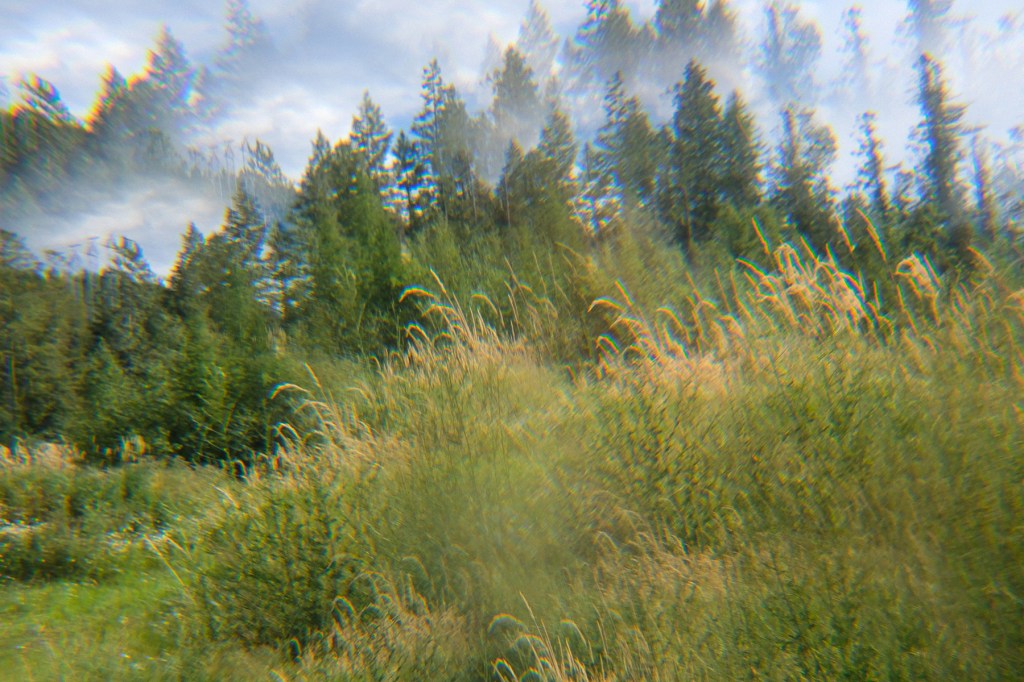
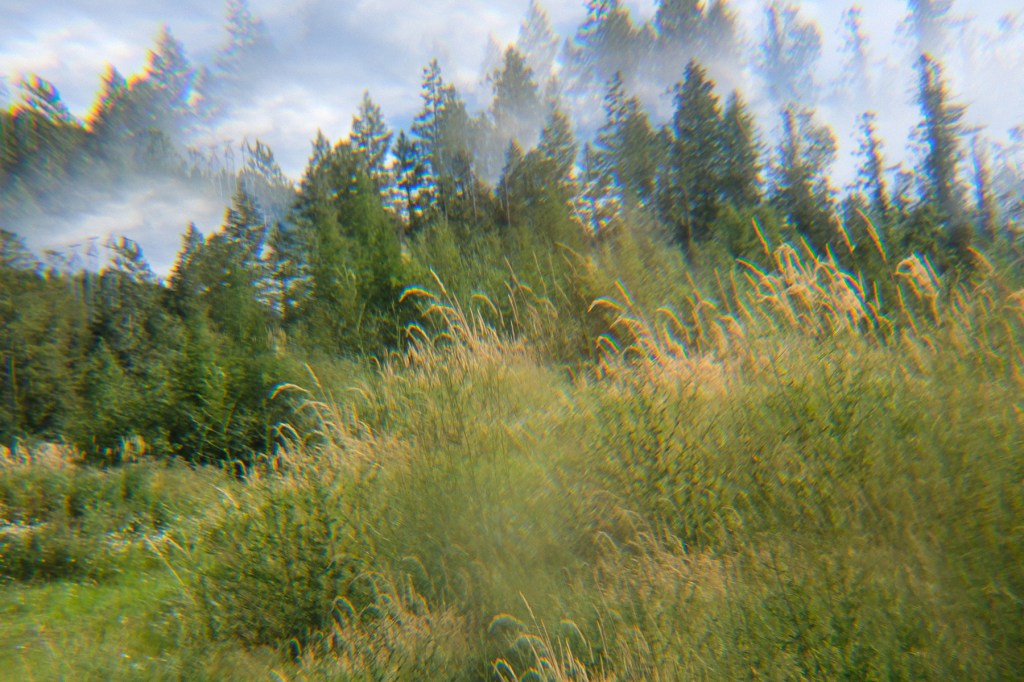
A Warm Day in February is based on a field recording taken during February 2021 in Lewiston Maine and captures the end of the quiet of COVID, a return to a frenetic pace of life. It was a 60-degree day which should have been 30 degrees, pointing toward the ever-warming planet, but a relief from the cold of winter.
Felix Meyer
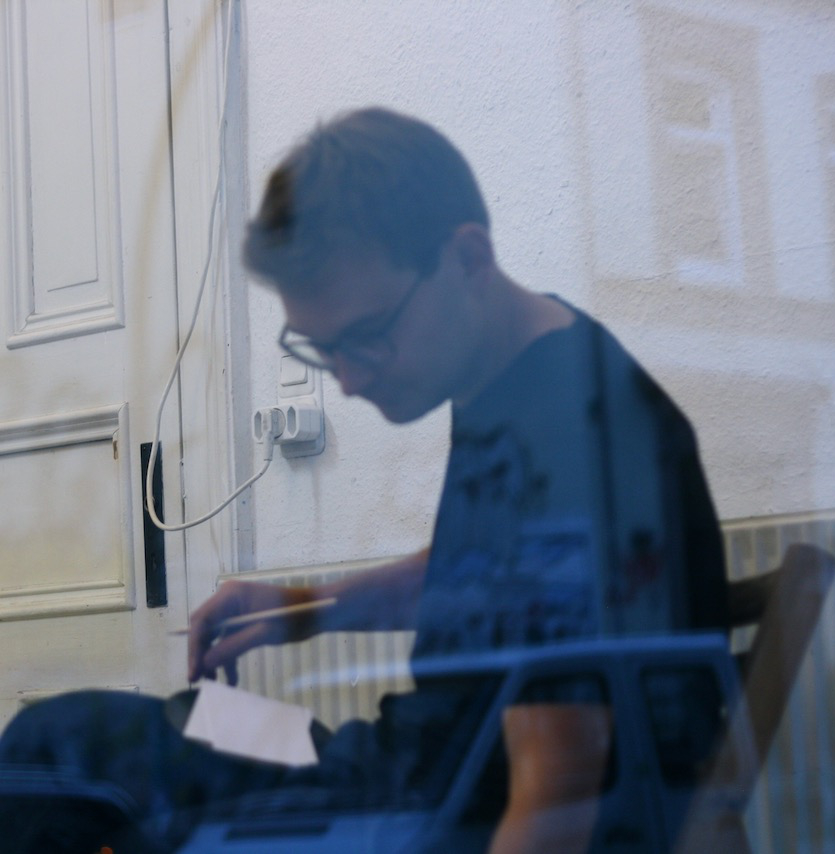
Felix Mayer is a Hamburg based trombonist, composer, sound artist and curator, exploring boundaries of improvisational, compositional and instrumental practice, in bands, collectives and ad-hoc groups. In multidisciplinary collaborations with literature, dance, theatre, film and performance, his composed works use alternative notation such as text and game pieces, video scores and improvisation concepts. In installative, site-specific works, he deals with the possibilities of the success of communication, connection and relationship via (always) alienating aids.
Capri Code is an 8-channel sound installation that reflects the specific soundscape of the installation site and the immediate surroundings and relates them to the places where the installation has already been done. With each realisation, the installation is adapted to the local conditions and expanded with recordings of the surroundings.
The complete piece has a duration of 16 minutes and starts way quieter and calmer.
Hilda Daniel
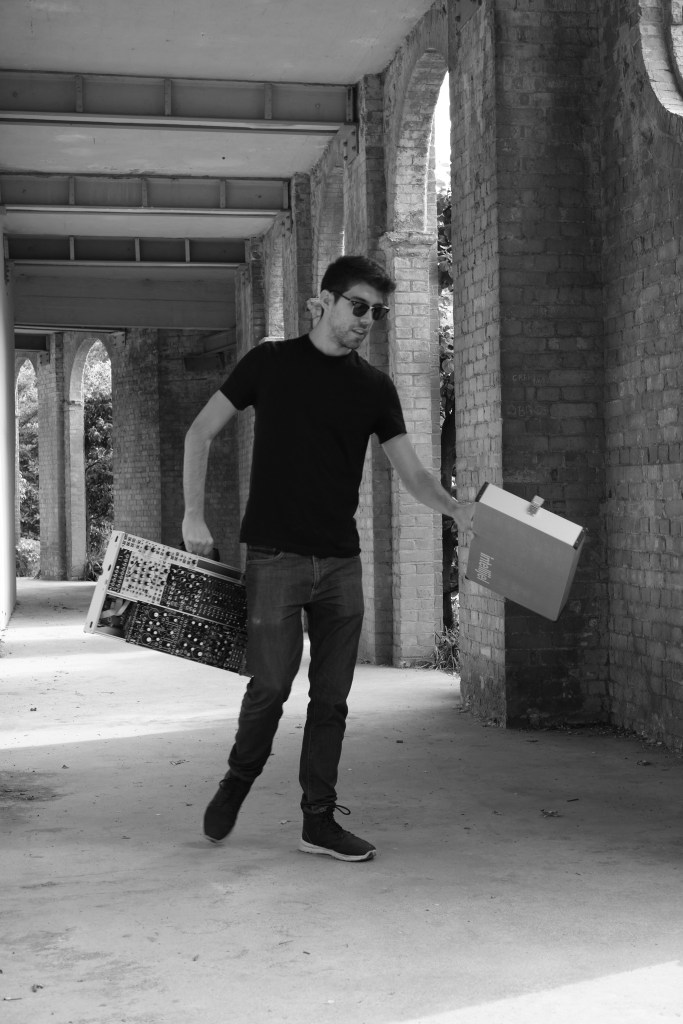
Hilda Daniel is an American multi-media artist from Singapore currently living/working in New York City. She is very grateful to have had her work included in curated galleries, film festivals and sound exhibitions in major cities of the US, UK, Europe, Mexico and Canada, and to have it written about in the New York Times, Performance Art Journal and other publications.
Revir Noom iss Moon River’s longing, iconic promise in a melancholy reverse tide. The lyrics of the song, portraying a yearning for escape and transformation, a dream of self-determination, of escaping one’s original nature (as embodied and fulfilled by Holly in Truman Capote’s “Breakfast at Tiffany’s”), here retain a memory of their original narrative while torn from it in a digital reworking. A bit of dialogue and the song, sung by Audrey Hepburn in the1961 movie based on the novella, are re-recorded backwards with minimal processing. By this simple process, the song makes a complete transformation: with its own distinct melody, arrangement, language and meaning – a current pulling forward (now dragging backward) as the piece ends with Holly (or Lula Mae) not so much singing as swallowing her own words.
In the artist’s words:
“The digitally altered sounds, though unrecognizable as the words they once were and exposing a kind of alienation (of the words from their meaning, the words from themselves, as Holly from Lula Mae), form a language at once hermetic and intelligible through their collective role making up the whole and through their familiarity: breath, sighs, sounds with a particular cadence. It is particularly effective I believe for the themes and the sounds in the piece, as in Echolullia [previously aired in EARS HAVE EYES], to be expressed by a woman. The interrupted, cut short, detached bits of the stories of the novella and film and song in some sense reflect a detachment of women’s voices and the modes of expression traditionally expected or not expected of them – to varying degrees they were not expected to have anything intelligible or of import to say, believed not to have the same capacity to contribute to discourse, literature or political speech as men, women’s voices were heard in hushed tones (like the lull of lullabies), in sighs and hums and moans, gasping or singing, breath for comfort. The bits of words in the piece are moving for what they imply and for their familiarity – in these ways, in spite of and through their electronic obliterations, their expressions are clear.”
Jorge Ramos
Jorge Ramos (b. 1995) is a Portuguese multiple award-winning composer, electronics performer, and researcher based in London. He has written solo, chamber, symphony, mixed, electroacoustic, live-electronics, film, stage, and advertisement music for festivals, orchestras, ensembles, and soloists across Asia, North America, Central America, South America, and Europe such as the Calouste Gulbenkian Orchestra, Casa da Animação, Cat’s Cradle Collective, Frederic Cardoso, Orquestra Clássica do Centro, Banda Sinfónica Portuguesa, Ricardo Pires, Sónia Oliveira, and The Hermes Experiment. A DMus researcher at the Royal College of Music London, he is funded by the Calouste Gulbenkian Foundation, and Royal College of Music London, where he also holds a position as Graduate Teaching Assistant and a Digital Learning Ambassador.
About Paysage:
“Dennis Smalley (b. 1946) defines source bonding as the natural tendency to relate sounds to supposed sources and causes and to relate sounds to each other because they appear to have shared or associated origins. Thus, bonding play is an inherent perceptual activity. Consequently, I began to rethink how and what to think about ‘sound’ and its behaviour, and most importantly, to hear ‘sound’ differently. This self-reflection on my sonic somatic knowledge led to a broader perspective on what I, as a composer and researcher, should consider being sound as music. Hence, I wrote Paysage, a soundscape piece based on the processing of the sounds that surrounded me during the writing process. This effect was enhanced by the imposed limitations during confinement, which meant that I had to share the same house to work and to live in, which made me realize how musical sound is constantly all around us.”
Luca Nascuiti
Luca Nasciuti is a composer and artist based in London and Cairo. He uses field recordings to build complex soundscapes. His sound is urgent and physical, rooted in the natural and man-made sources he employs.
What We Have Given combines fragments of melodies recorded on the cello with field recordings of the composer’s family home. The piece has an intimate connection with childhood memories, time and loss. The composition is organised in a spontaneous manner. Fragments are generated through improvisation with the scope of maintaining a strong melodic content while allowing pitch to oscillate freely in and out of tune. This approach attempts to question our relationship to western canons of music allowing melody to operate as textures that interact with field recordings.
Noel Zavala
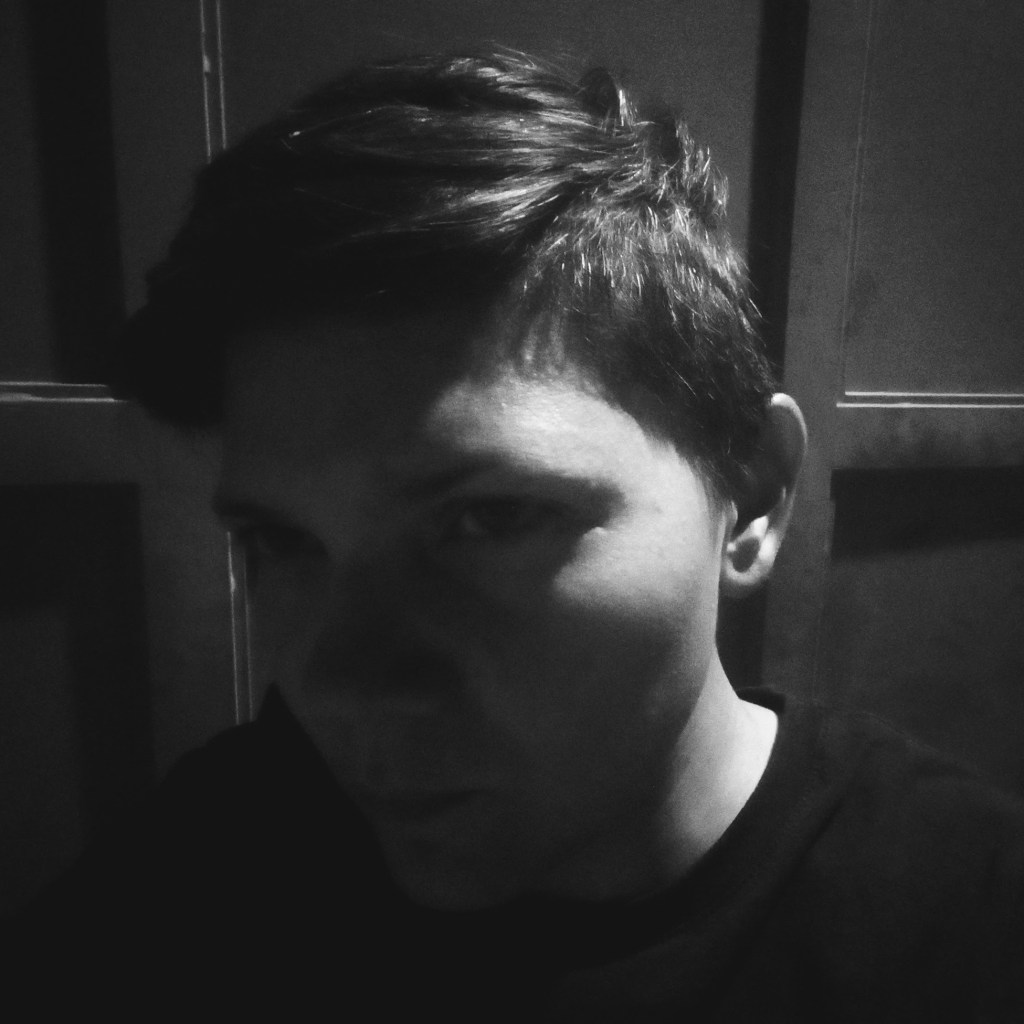
Noel Zavala (they/them) is from Monterrey, México. In 2009, they started making musical and sound backgrounds for live performances at poetry festivals. Since then, they’ve enjoy mixing home recordings, field recordings of their surroundings, and samples of music that convey a sense of foreignness with readings of poetry and philosophy to understand how they daily relate to the world through their sense of hearing and the impressions that objects leave in their memory through sound.
About Año Sabático Día 2 Eléctrico y Doméstico:
“‘Electrodoméstico’ is the spanish word for ‘house appliance.’ Being at home during the days of the Covid-19 confinement made these sounds so constant and present through my daily life that I started relating to them with a special attention, until the adjectives ‘electric’ and ‘domestic’ seemed reiterative of the same feeling, which i decided to approach through this collection of ideas and recordings: my then 2yo daughter learning to speak and wandering through the house, a radio, myself reading Rizoma and an excerpt of one of Stockhausen’s lectures where he states the continuum between sound, music and noise.”
Stephen Roddy
Stephen Roddy is a musician, sound artist and researcher based at the Radical Humanities Laboratory at University College Cork. His upcoming album, Leviathan released September 1st by Fiadh productions, explores our impending climate catastrophe.
Thonis-Heracleion, peaceful beneath the waves is based on Thonis-Heracleion (Egyptian-Greek names), an ancient Egyptian City founded around the 8th century BC on adjoining islands on the mouth of the Nile Delta. The city was built around a central temple to Khonsou-Herakles from which a network of canals interspersed with docks and quays cut across the city. For 1000 years it acted as the port of entry for ships from the Greek world until a combination of earthquakes, tsunamis, and rising sea levels caused the sinking of the city into the Mediterranean Sea. It wasn’t until the year 2000 that it was finally rediscovered having sat peacefully below the waves for 1200 years. The story of Thonis-Heracleion presages what lies in store for coastal cities facing the ravages of climate change in the coming years.
This work is part of a project called Leviathan exploring climate catastrophe through a series of 5 vignettes tied to specific locations worldwide that have something to teach us about the impending disaster.
About Leviathan:
“Leviathan was recorded around midsummer 2023, from June 20th-24th, with the final piece recorded on July 2nd. It was recorded in response to our rapidly intensifying climate catastrophe. July 3rd, 2023 was the hottest day ever recorded on this planet and 2 days later on July 5th a particularly intense El Niño arrived. There are many interpretations of the Leviathan concept, but here Leviathan is the mythological world-serpent who encircles the Earth in a ring, and upon whom the Earth is built. It is the anima mundi or world-soul that separates the material earth from the chaos of the immaterial. The death of the Leviathan is the end of the material world and so the death of the Earth too. Iterations and deviations on this central idea recur across diverse cultures with Babylonian Tiamat, Sesha of the Hindu Puranas, and Norse Jörmungandr, but the version described here above is most identifiable with Ophite Gnosticism.
Thomas Hobbes’ Leviathan is a totalitarian force for social and political cohesion. Conceived during a time of Civil War and rooted in a deeply materialist framework, Hobbes’ Leviathan is an absolute sovereign to whom members of a society, in social contract with one another, cede certain powers, claims, and freedoms so that they might live alongside one another in peace. Hobbes’ intense fear of anarchy and chaos, represented in his hypothetical state of nature, lent a distinctly fascist flavour to his thinking. Regardless of this, or maybe even because of this, Hobbes’ Leviathan has been deeply influential in the realms of political theory and international law.
Faced with the inevitability of climate collapse, we find our social and political worlds in advanced states of decay while the Earth, greedily exploited and abused now for centuries, winds and coils around us twisting itself into ever more inhospitable configurations. The lives of many are becoming increasingly solitary, poor, nasty, brutish, and short. Leviathan confronts this looming state of ecological and socio-political collapse in a series of sonic tableaus assembled around the four basic elements of alchemy: Water, Wind, Earth, and Fire. Each piece reflects upon a unique real-world location in the context of its relationship to our impending annihilation. Sonically, each tableau is crafted with a combination of electric guitar and sampled instrumentation with musique concrète and computer music techniques. The results sit somewhere between dark ambient, ritual drone, and noise music.
The final piece here is an ode to, and lament for, the Leviathan as the hypothetical anima mundi that once encircled and held together a world that now seems caught in an inescapable downward spiral, in which we edge ever closer to ecological cataclysm, and human tragedy abounds.”
Dr. Tibor Donath
Dr. don Ath is a Hungarian sonicinstaller, sound artist, lawyer and journalist, founder of SynthXLoop Audio Arts. Since 2020, his sonic installations can be heard mainly in art exhibitions. He regularly works on request with experimental visual artists, advises as a lawyer on copyright law and is legal advisor to several art societies.
Travelling on the Quasi-Moon is about FW13, a meteor about 15 metres wide. During its orbit, it will come within 14 million kilometres of Earth. It has been tracking the Earth since at least 100 BC, the time of Julius Caesar, and could remain in the vicinity for more than 1500 years. No one suspected that this tiny asteroid was full of life and sound. Because it poses no impact threat to the planet, no one has paid attention to it for thousands of years. Researchers at an observatory detected strange sounds coming from space, which they recorded with a radio telescope. After careful analysis of the radio waves, we decided to reproduce the sounds coming from inside the asteroid in a range audible to the human ear.
Travelling on the Quasi-Moon is part of Tibor’s new album, Granular Up Your Mind.
About Granular Up Your Mind:
“Pipes in our mouths, my dear friend! And under the armpit, at least a portable synthesizer with audio input, so you can tap into beautiful, strange or distorted sounds and pick out tiny grains of them anywhere and anytime. At first glance, this might sound like something out of a sausage grinder, but the end result will be more wonderful than tasty. Truth be told, I loved the granular synthesis on first listen, so there was no question which way to go after the soundhunting. It’s a never ending story anyway, I hope I never reach the finish line, because then I get tired and bored of all the sounds and all I’m left with is silence. But now, just thinking about this sound synthesis makes my temperature immediately skyrocket. It’s no coincidence that I’m looking forward to a cool November to cool down thoroughly. I don’t want to impress you with these sounds, the sounds will do that if they want to. They are arbitrary beasts, you must tame your ears to them. If you’re a beginner, it’s not easy to get there, by the time you realise that these are really drone meditation sounds, you have to open your mind to them. 3 hours and a few more important seconds… I think that’s a lot for you to take in. So it would be better if you did it after me: if you have managed to open up your mind to little bits and pieces, you are on the right track if you can’t see and feel anything but a little calm.”

Thank you to the artists & listeners!
Special thanks to CJSW.
Want to share your sound art on future episodes of EARS HAVE EYES?
Visit this link for more information.

